


06.19.2026
Japan Launches New “Specified Residence Card” for Foreign Residents
Table of contents
- Integrated residence and My Number card system begin nationwide
- What has changed with the new card design?
- Why did Japan introduce the integrated card?
- Is the Specified Residence Card mandatory?
- How can foreign residents apply?
- Important things to keep in mind
- A step toward simpler administrative procedures
Integrated residence and My Number card system begin nationwide
Japan officially launched its new “Specified Residence Card” system on June 14, 2026, giving foreign residents the option to combine their residence card and My Number card into a single government-issued identification document.
The Japanese government introduced the system as part of its broader effort to streamline administrative procedures and expand digital public services. Officials say the integrated card will reduce paperwork and make it easier for residents to access government services while managing immigration-related requirements.
Special permanent residents can also apply for an integrated version called the “Specified Special Permanent Resident Certificate.”
What has changed with the new card design?
One of the most visible changes is the redesign of residence cards issued on or after June 14.
Under the new format, the government no longer prints certain information directly on the card. Instead, it stores this information electronically on the card’s IC chip.
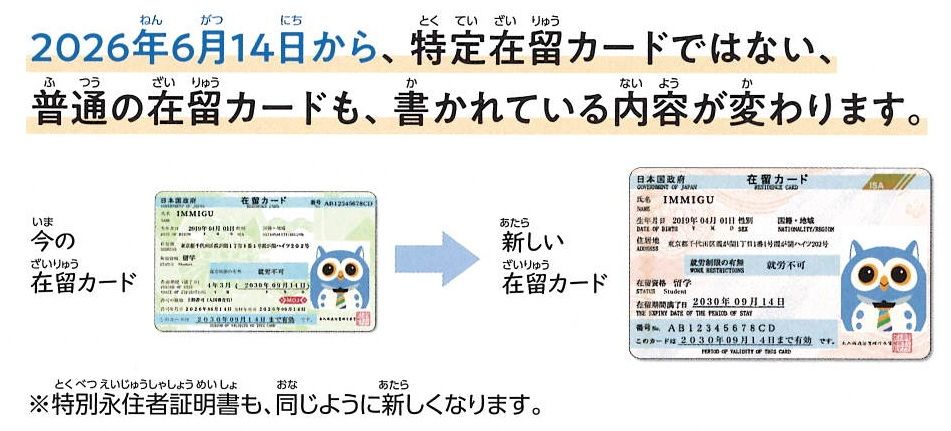
Photo credit: Yokoyama
The IC chip now contains:
- Period of stay
- Permission status and permit information
- Date permission was granted
- Date of card issuance
As a result, newer cards have a simpler appearance than previous versions. Residents can view this information through official digital tools, including the government’s Residence Card Checker application.
Officials say the redesign strengthens security and supports Japan’s ongoing push toward digital government services.
Why did Japan introduce the integrated card?
Until now, foreign residents typically carried two separate forms of identification: a residence card issued by immigration authorities and a My Number card used for tax, social security and municipal services.
The Specified Residence Card combines both functions into a single document.
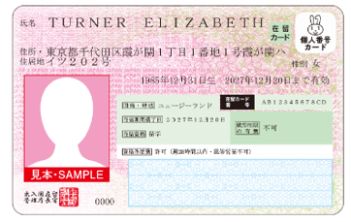
Photo credit: Yokoyama
According to government guidance, the new system aims to simplify administrative procedures and reduce the burden on residents who regularly update personal information or verify their identity with multiple government agencies.
By bringing immigration and My Number functions together, the government hopes to make many interactions with immigration offices and municipal governments faster and more convenient.
Potential benefits for foreign residents
Eligible residents may benefit from:
- Carrying fewer identification documents
- Simplifying identity verification procedures
- Reducing administrative paperwork
- Accessing government services more conveniently
- Improving coordination between immigration and municipal records
Officials emphasize that the new card does not change immigration requirements or residency obligations. Instead, it simplifies how residents manage existing administrative procedures.
Is the Specified Residence Card mandatory?
No. Foreign residents do not need to switch to the new card.
Residents may continue using a standard residence card alongside a separate My Number card if they prefer. Like the current My Number system, participation in the integrated card program remains voluntary.
This flexibility allows residents to choose the option that best suits their needs.
How can foreign residents apply?
Residents can apply for a Specified Residence Card through Regional Immigration Services Bureaus and, in some cases, municipal offices.
Photo credit: Coto Academy
Eligible situations include:
- Renewing a residence status
- Changing residence status
- Applying for permanent residence
- Replacing damaged or expired cards
- Completing other immigration-related procedures
At this time, the government does not support online applications for the integrated card. Applicants must generally visit the appropriate office in person.
Because requirements may differ depending on individual circumstances, residents should confirm application procedures with immigration authorities before applying.
Important things to keep in mind
The government will not automatically issue a Specified Residence Card to every foreign resident.
Eligibility and issuance requirements vary depending on individual circumstances. In some cases, authorities may continue issuing a standard residence card instead.
Residents should also remember that the card’s My Number functions remain tied to the validity of their residence status. To continue using the card’s full range of services, residents must maintain a valid immigration status.
As with current residence cards, residents must still complete renewals, status changes and other immigration procedures in accordance with Japanese regulations.
A step toward simpler administrative procedures
The launch of the Specified Residence Card marks one of the most significant updates to Japan’s identification system for foreign residents in recent years.
By combining residence card and My Number functions into a single document, the government hopes to reduce administrative complexity and improve access to public services for Japan’s growing international community.
Although the integrated card remains optional, it may offer added convenience for residents who regularly use both immigration and municipal services.
For many foreign residents, navigating Japan’s administrative systems can feel overwhelming. Staying informed about policy changes and available services can make daily life and long-term residency easier to manage.
As international residents build their lives in Japan, they often juggle responsibilities such as immigration procedures, banking and supporting family members abroad. Services like Smiles Mobile Remittance help residents send money internationally from their smartphones, making it easier to stay connected with loved ones back home.
Today's rate
1 JPY = 0.4 PHP
2026 September 21, Mon 14:45Ready to send money overseas? Smiles makes sending money fast, safe, and convenient.